limb regeneration science explores why humans cannot regenerate limbs like salamanders. This fascinating topic delves into the biological differences between species and the potential for future advancements in regenerative medicine.
Understanding Limb Regeneration
Limb regeneration science has captivated researchers for decades, particularly due to the remarkable ability of certain species, like salamanders, to regrow lost limbs. However, this phenomenon does not extend to humans, and understanding why is crucial for advancing regenerative medicine.
Several challenges hinder limb regeneration in humans:
- Complexity of Human Anatomy: Unlike salamanders, human limbs consist of intricate structures including bones, muscles, and nerves.
- Cellular Limitations: Human cells have a limited capacity for regeneration compared to those found in regenerative species.
- Immune Response: The human immune system often reacts negatively to attempts at regeneration, complicating medical interventions.
By exploring these challenges, scientists hope to unlock the secrets of limb regeneration, paving the way for innovative treatments that could one day allow humans to regenerate lost limbs.
The Science Behind Salamanders
Salamanders are renowned for their remarkable ability to regenerate lost limbs, a phenomenon that has captivated scientists for years. The science behind salamanders’ limb regeneration lies in their unique cellular and molecular processes.
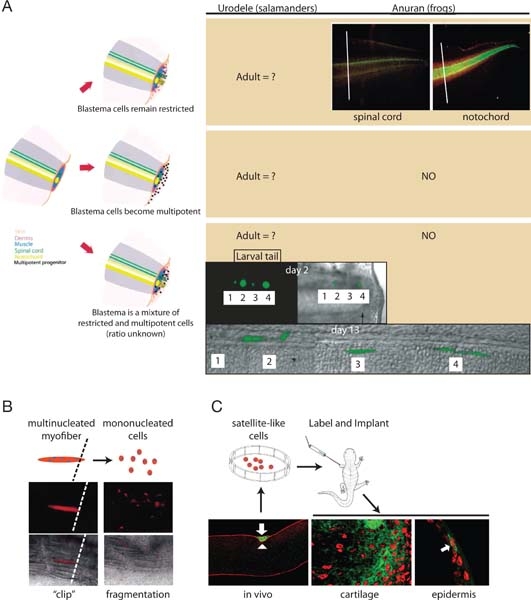
When a salamander loses a limb, specialized cells called blastemal cells form at the site of the injury. These cells are capable of transforming into various cell types needed for the new limb, including muscle, cartilage, and skin. This regenerative capability is supported by:
- Stem Cell Activation: Salamanders can activate their stem cells in response to injury.
- Growth Factors: They produce unique proteins that promote healing and tissue growth.
- Immune Response: Their immune system does not hinder regeneration, unlike in mammals.
Understanding the science behind salamanders could unlock secrets to limb regeneration science in humans, potentially leading to breakthroughs in regenerative medicine.
Comparing Human and Salamander Biology
Comparing human and salamander biology reveals significant differences that impact limb regeneration science. Salamanders possess remarkable regenerative abilities, allowing them to regrow limbs, tails, and even parts of their heart. This capability stems from their unique cellular structure and the presence of specialized cells known as blastoids, which can transform into any cell type needed for regeneration.
In contrast, humans have a limited ability to regenerate tissues. While we can heal wounds and regenerate certain organs, the complexity of human limb structure poses a challenge. The following factors highlight key differences:
- Cellular Response: Salamanders can reprogram their cells to initiate regeneration, while human cells typically do not share this flexibility.
- Immune System: Salamanders have a more permissive immune response that supports regeneration, unlike the human immune system, which can hinder tissue regrowth.
- Genetic Factors: Specific genes responsible for regeneration are more active in salamanders than in humans.
Potential for Medical Advances
The field of limb regeneration science presents numerous opportunities for groundbreaking medical advances. Researchers are exploring various avenues that could lead to significant improvements in regenerative medicine.
- Tissue Engineering: Advances in biomaterials and scaffolding could enable the growth of new limbs or tissues, mimicking the natural regeneration seen in salamanders.
- Stem Cell Research: Scientists are investigating the potential of stem cells to differentiate into various cell types necessary for limb regeneration, potentially offering solutions for injuries and amputations.
- Gene Editing: Technologies like CRISPR may allow scientists to modify genes associated with regeneration, paving the way for enhanced healing processes in humans.
- Regenerative Therapies: Developing therapies based on the mechanisms found in salamanders could revolutionize treatment for patients suffering from severe limb loss or trauma.
While challenges remain, the potential benefits of advancing limb regeneration science are immense.
Future of Regenerative Medicine
The future of regenerative medicine holds promising potential for limb regeneration science, as researchers continue to investigate the mechanisms that allow certain species, like salamanders, to regrow limbs. Advancements in this field could lead to groundbreaking treatments for traumatic injuries and congenital disabilities.
Key areas of focus include:
- Stem Cell Research: Unlocking the secrets of stem cells could provide insights into cellular reprogramming and tissue regeneration.
- Genetic Engineering: Techniques such as CRISPR may enable scientists to manipulate genes associated with limb growth.
- 3D Bioprinting: This innovative technology could facilitate the creation of bio-compatible scaffolds for limb repair.
Despite these advancements, challenges remain, including ethical considerations, immune responses, and the complexity of human anatomy. Continued research in limb regeneration science will be crucial to overcoming these hurdles.
By Gurley, K.A. and Sánchez Alvarado, A., Stem cells in animal models of regeneration (December 31, 2008), StemBook, ed. The Stem Cell Research Community, StemBook, doi/10.3824/stembook.1.32.1, http://www.stembook.org. via Openverse