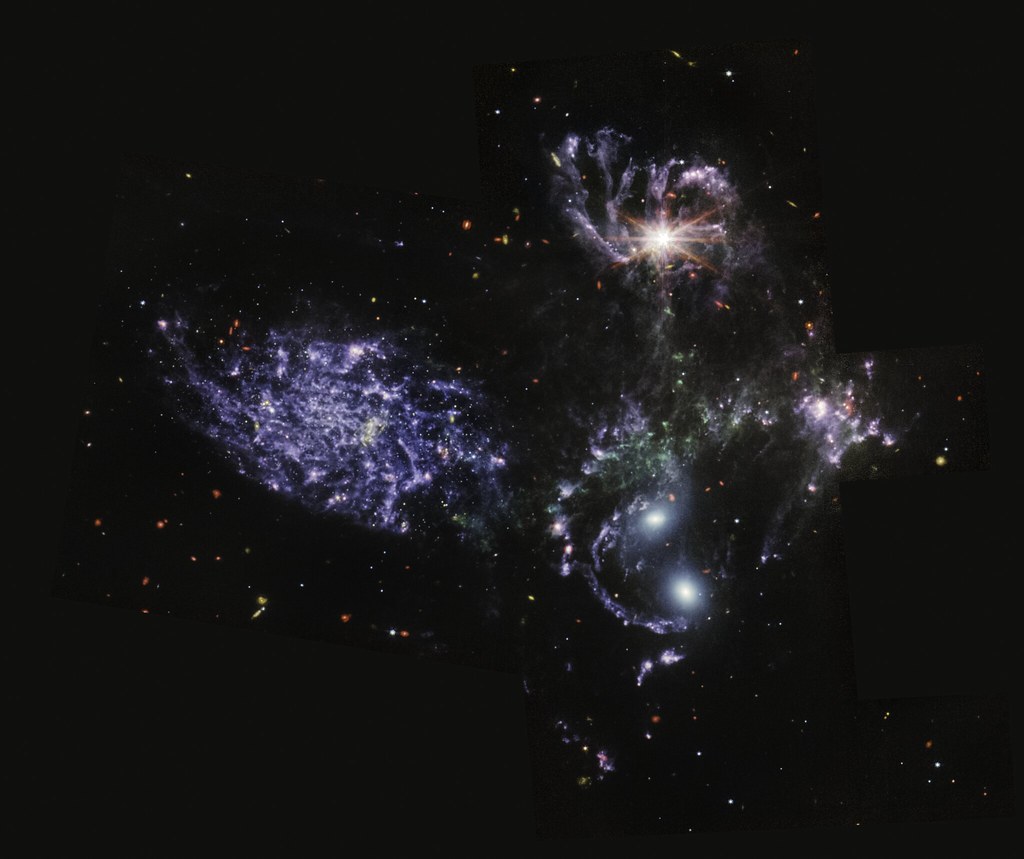
Webb Space Telescope black holes are intriguing discoveries that may hold the key to understanding the universe’s early formation and evolution.
Understanding the Webb Space Telescope
The Webb Space Telescope has revolutionized our understanding of the cosmos, particularly in relation to black holes. As the most advanced space observatory ever built, it has the capability to observe the universe in unprecedented detail, allowing astronomers to explore areas previously shrouded in mystery.
One of the telescope’s remarkable features is its ability to capture infrared light, which is crucial for studying distant celestial objects. This capability enables scientists to peer through cosmic dust and gas, unveiling hidden phenomena that were once invisible to earlier telescopes.
Recent findings suggest that the little red dots observed by the Webb Space Telescope may be integral to understanding the formation and growth of the first black holes. These dots represent distant galaxies and stellar nurseries, providing vital clues about the conditions that led to the creation of black holes.
Researchers are excited about the potential implications of these discoveries, as they could reshape our comprehension of the early universe. The data obtained from the Webb Space Telescope offers a unique perspective on the evolution of black holes, leading to new theories and hypotheses about their origins and significance in the cosmic landscape.
The significance of black holes
The discovery and study of black holes have always been at the forefront of astrophysical research, and the Webb Space Telescope is poised to transform our understanding of these enigmatic entities. The significance of black holes lies not only in their mysterious nature but also in their critical role in the formation and evolution of galaxies.
Black holes serve as cosmic anchors, influencing star formation and the dynamics of galaxies. Their immense gravitational pull can affect the motion of surrounding stars and gas, providing insights into the laws of physics under extreme conditions. As researchers utilize the Webb Space Telescope to observe distant galaxies, they hope to uncover the characteristics and behavior of early black holes.
Recent findings suggest that the little red dots observed by the telescope may be the key to unlocking the secrets behind the universe’s first black holes. These observations could help answer fundamental questions, such as how black holes formed shortly after the Big Bang and how they have evolved over time.
As scientists delve deeper into the data collected by the Webb Space Telescope, the implications of these discoveries could reshape our understanding of black holes and their significance in the cosmos.
How do we find black holes?
Identifying black holes has long been a challenge for astronomers, but advancements like the Webb Space Telescope are changing the game. The telescope employs a range of sophisticated techniques to locate these elusive cosmic phenomena.
One of the primary methods involves observing the effects of black holes on their surrounding environments. This includes:
- Gravitational lensing: Black holes can warp the space around them, bending light from distant stars. This phenomenon can reveal the presence of a black hole by creating a distinct visual signature.
- Accretion disks: When matter falls into a black hole, it forms an accretion disk. The intense heat generated in this process emits X-rays, which can be detected by the Webb Space Telescope.
- Stellar motion: By tracking the orbits of nearby stars, astronomers can infer the presence of an unseen mass, indicating a black hole’s location.
Additionally, the Webb Space Telescope’s ability to observe infrared wavelengths allows it to penetrate dust clouds that often obscure black hole activity. This capability could provide critical insights into the formation and evolution of black holes in the universe.
Webb’s discoveries and future implications
The Webb Space Telescope has made remarkable discoveries that could reshape our understanding of black holes and their formation. Among these findings, scientists have identified several distant, faint objects that may represent the first black holes in the universe. These discoveries not only enhance our knowledge of how black holes evolve but also provide a glimpse into the conditions of the early universe.
One of the most significant implications of Webb’s observations is the potential to uncover the relationship between black holes and their host galaxies. By studying the interactions and growth patterns of these celestial bodies, researchers can gain insights into how black holes influence galaxy formation and evolution over cosmic time.
As Webb continues to collect data, scientists are eager to explore questions that remain unanswered. For instance:
- How do black holes impact star formation in their vicinity?
- What role do they play in the overall structure of the universe?
- Can we pinpoint the exact moment when black holes began to form?
These inquiries not only highlight the importance of the Webb Space Telescope black holes research but also underscore the telescope’s potential to unlock many of the universe’s deepest mysteries.
The discovery of Webb Space Telescope black holes has opened new avenues for understanding the universe’s formation. Researchers believe that these Webb Space Telescope black holes could provide crucial insights into the behavior of matter and energy in extreme conditions.
By James Webb Space Telescope via Openverse